HomeGalvanized Scaffolding: Hot-Dip vs Painted vs Powder Coated
Galvanized Scaffolding: Hot-Dip vs Painted vs Powder Coated
Galvanized scaffolding is the workhorse finish for system scaffolding. We compare hot-dip, painted, and powder coated steel, and tell you what to ask before you buy.
Published 2026-09-19 · VANHN editorial team
Galvanized scaffolding. It's the finish you see on most system scaffolding, right there on site. At VANHN, hot-dip galvanized is our main finish. Painted or powder coated? Optional. This guide breaks down how hot-dip galvanizing protects steel, where painted and powder coated finishes make sense, and what you should ask any supplier before you commit.
Why hot-dip galvanizing is the default finish for system scaffolding
Hot-dip galvanizing means dipping fabricated steel or iron into a kettle of molten zinc. Hot-Dip Galvanizing for Corrosion Resistance. Not a paint. The zinc bonds to the steel, forming a coating that's part of the metal itself.
That bond matters on a scaffold. Components get knocked around, dropped, dragged. A hot-dip galvanized coating resists corrosion through barrier and cathodic protection, as well as the development of the zinc patina. Hot-Dip Galvanizing for Corrosion Resistance. The zinc layer acts as a sacrificial anode, corroding before the steel. Even if the coating is damaged to the point bare steel is exposed (up to about ¼ inch in maximum diameter), no corrosion will begin until all the surrounding zinc is consumed. Corrosion Protection for Steel - American Galvanizers Association.
So a scratched standard or ledger doesn't rust at the scratch. The zinc around it sacrifices itself first. It's one reason we state a service life of 15 years or more for our hot-dip galvanized components. And it's why heavy-duty, offshore, and long-term projects specify hot-dip galvanized scaffolding.
How hot-dip galvanizing protects steel scaffolding
Protection isn't just on the outside. Total immersion coats hollow and tubular structures inside and out. Hot-Dip Galvanized Steel Benefits. For scaffolding tubes, that's critical. Water gets inside a tube. If only the outside is coated, rust starts on day one. Hot-dip galvanizing reaches the inside of every tube.
The zinc coating's intermetallic layers bond to the base steel at about 3600 psi. Not a film sitting on top, it's a metallurgical bond. Hot-Dip Galvanized Steel Benefits. Scratch a galvanized component and the surrounding zinc keeps protecting the exposed steel. No touch-up needed after minor scratches. Inspection? Visual and simple. Look for uniform coverage, no bare spots, no sharp drips.
At our plant, hot-dip galvanized is the main finish for ringlock scaffolding components. We also offer steel scaffolding in galvanized, painted, or powder coated finishes. Depends on the system and the buyer's requirements.
Galvanized vs. painted vs. powder coated scaffolding
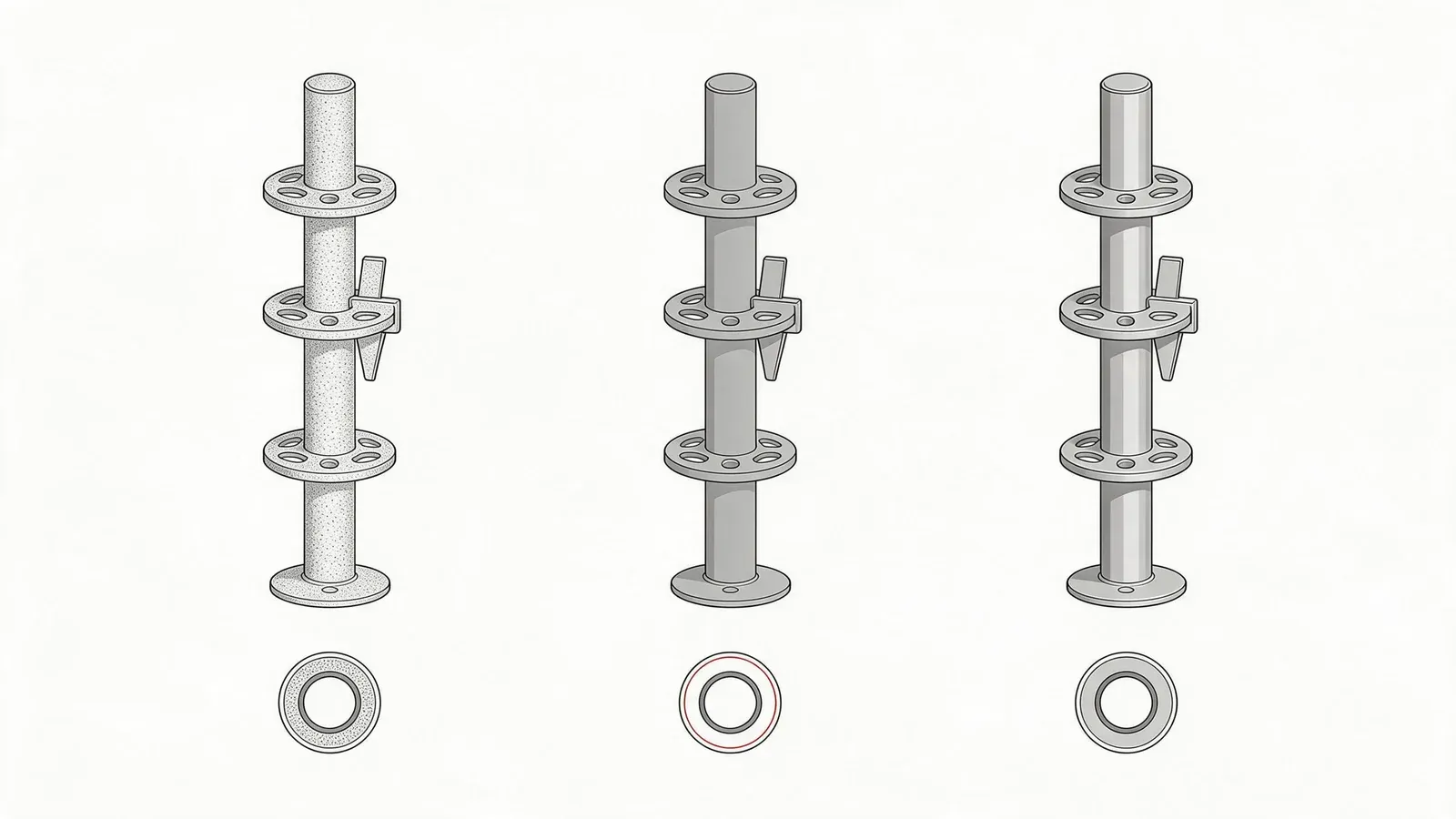
Painted finish is cheaper up front, sure. But it chips, and then you're patching it. Powder coating is baked on, which usually gives a tougher skin than wet paint. Still not sacrificial, though. Scratch it and the steel rusts. For rental fleets and permanent installs, hot-dip galvanized lasts longest and costs least over time.
| Finish | Protection | Durability | Typical use |
|---|---|---|---|
| Hot-dip galvanized | Barrier + cathodic | Highest, 15+ years | Heavy-duty, offshore, long-term rental |
| Painted | Barrier only | Low, chips easily | Short-term access, indoor use, color coding |
| Powder coated | Barrier only | Medium, uniform but not sacrificial | Architectural, moderate corrosion environments |
Which finish makes sense? Depends on the project. Galvanized for permanent or harsh environments. Painted or powder for short-term work or color coding. Have a three-week indoor event and need a red scaffold? You don't need hot-dip. Renting out scaffolding for years in a coastal city? You do.
Where each finish makes sense on a project
Offshore, marine, industrial, long-term rental fleets: hot-dip galvanized is the right call. That sacrificial protection pays you back. Painted? Think short-term access, indoor use, color coding. Powder coated suits architectural or aesthetic needs in moderate corrosion environments. Mixed finishes? They pop up often. Galvanized standards with painted accessories. Or galvanized ledgers with powder coated planks.
Say you're building a temporary stage. Painted scaffolding works fine. It's up for a week, then gone. But a scaffold sitting on a chemical plant for five years? Hot-dip galvanized is the only sensible choice. No debate.
What to ask a galvanized scaffolding supplier
Don't take a supplier's word for it. Ask the following:
- Which components are hot-dip galvanized, and which are painted or powder coated?
- How do you treat welded joints and cut ends when galvanizing?
- Can you supply visual inspection criteria or test reports for the finish?
- What warranty or defect policy covers the finish?
- Do you have photos of the galvanizing process or the finished components?
- What service life do you claim for the finish, and what's that based on?
At VANHN, we can give you straight answers. Hot-dip galvanized is our main finish. Painted and powder coated are options, too. For hot-dip galvanized parts, we state a service life of 15 years or more. But we won't put load ratings on our site. When you request a quote, we'll provide project-specific data.
VANHN galvanized scaffolding: what we can honestly claim
We manufacture Ringlock, Cuplock, Kwikstage, frame, and accessories. Hot-dip galvanized is our main finish. Painted and powder coated are options too. For hot-dip galvanized components, service life is 15 years or more. We build our own welding machines. That means we control the welds before any finish goes on. No surprises later.
Here's a buyer checklist you can copy:
- Define the project duration and environment.
- Choose finish: hot-dip galvanized for harsh or long-term, painted for short-term or color-coded, powder coated for architectural.
- Ask the supplier which components get which finish.
- Ask how welded joints and cut ends are handled.
- Ask for visual inspection criteria or test reports.
- Ask about warranty or defect policy on the finish.
- Get a sample or visit the factory if possible.
Load ratings? We don't publish them on public pages. But we do publish our factory process and our honest claims.
FAQ
Which is better, galvanized steel or galvanized iron?
For scaffolding, galvanized steel is better. Steel is stronger and more ductile than iron. Hot-dip galvanizing works on both, but modern scaffolding uses steel tubes, not iron. The zinc coating protects either base metal the same way.
What is the best material for scaffolding?
Steel. That's the standard for system scaffolding. Q355 steel for standards and Q235 for ledgers and braces is common. Hot-dip galvanized steel gives the longest service life in harsh environments. Aluminum is lighter but less stiff and more expensive.
How long does hot-dip galvanized scaffolding last?
Hot-dip galvanized scaffolding components can last 15 years or more in normal use. The zinc coating provides sacrificial protection, so scratches don't rust. Life depends on environment: coastal or industrial areas will consume zinc faster than dry inland sites.
What should I ask a scaffolding supplier about galvanizing?
Ask which components are hot-dip galvanized vs. painted or powder coated. Ask how welded joints and cut ends are handled. Ask for visual inspection criteria or test reports. Ask about warranty or defect policy on the finish. Ask for photos of the galvanizing process.
Sources
- Hot-Dip Galvanizing for Corrosion Resistance galvanizeit.org
- Corrosion Protection for Steel - American Galvanizers Association galvanizeit.org
- Hot-Dip Galvanized Steel Benefits galvanizeit.org
Standards and regulations are cited as public reference material on site practice. They are not claims about VANHN products.
Tell us what you are building
Say what failed you last time. We answer with specifics, not a brochure.
- Made in our own plant, 100,000 m², founded 2016
- Hot-dip galvanized, painted or powder coated
- Reply within 24 hours